A plastic tank on the roof is how most Pakistani homes store water. Mains supply often comes only at set hours, and the tank keeps the taps running in between. A tank's price depends on its capacity, the layers in its wall and the maker. These are our current tank prices, read live from the shop:
| Product | Price (PKR) |
|---|---|
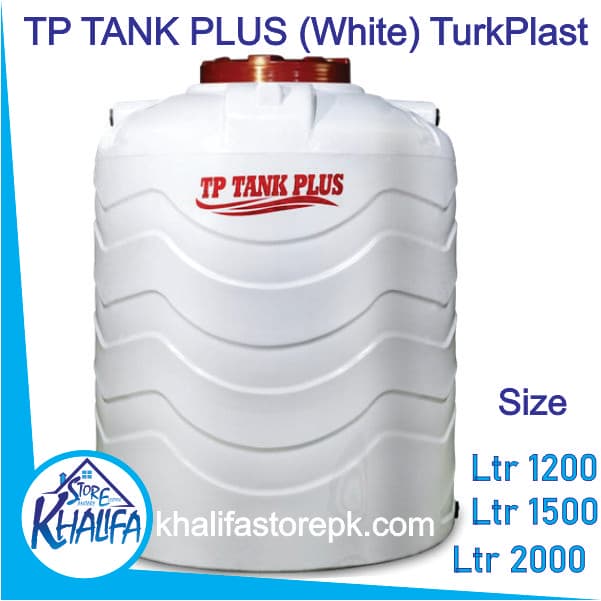
| TP TANK PLUS (White) TurkPlast | Rs.34,000 |
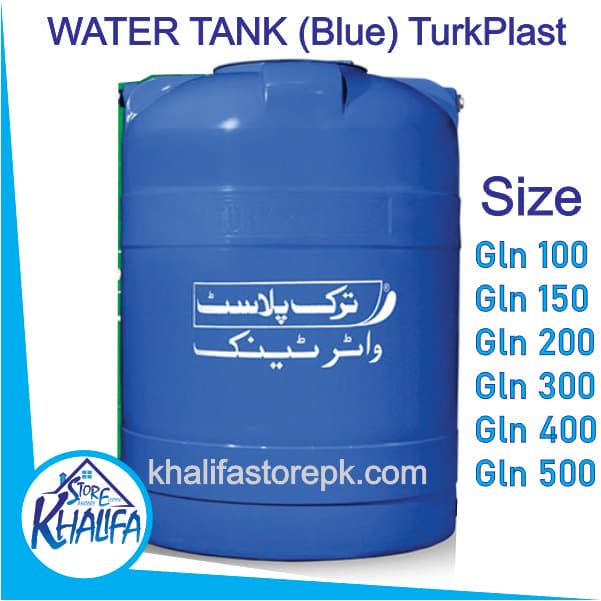
| WATER TANK (Biue) TurkPlast | Rs.38,000 |
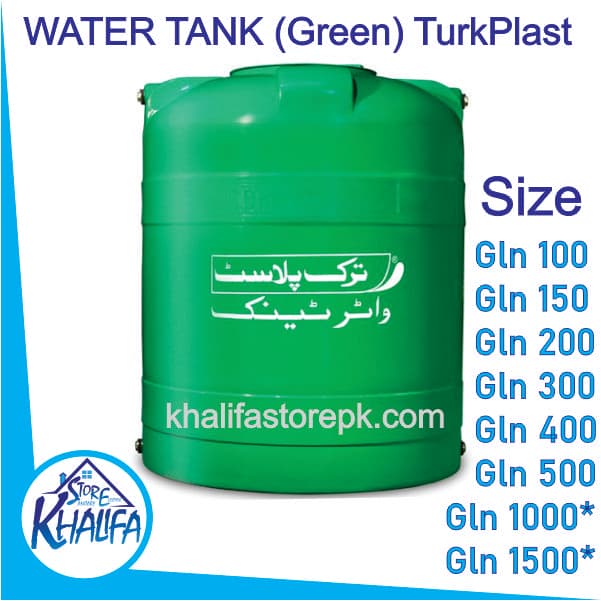
| WATER TANK (Green) TurkPlast | Rs.40,000 |
| WATER TANK BLOW MOULD (White) | Rs.42,000 |
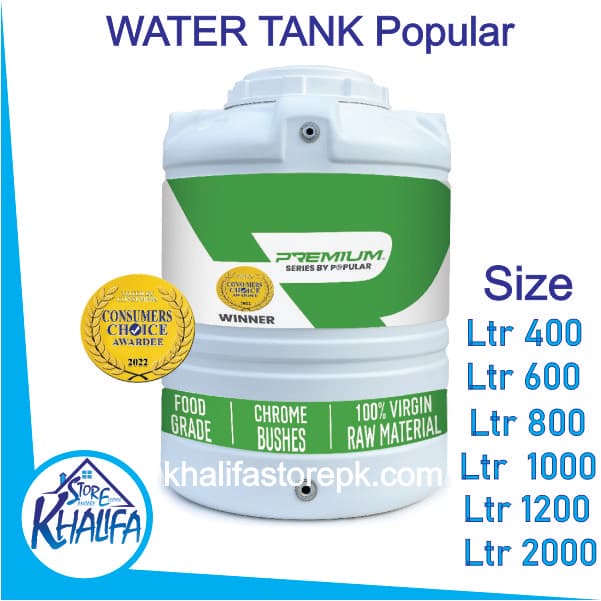
| WATER TANK Popular | Rs.45,000 |
Ask us on WhatsApp for a tank's capacity in litres before you order, and we'll help you check it suits your house.
How big a water tank do you need?
Work it out from how many people use the water and how long the tank must last between fills:
- Count the people in the house, including anyone who stays often.
- Estimate daily use per person. It varies a lot between houses: a garden, a car washed at home or a washing machine all push it up. If you're not sure, note how fast your current tank empties.
- Multiply by the days of storage you want. If water comes every day, one day's use plus some spare is enough. If supply is unreliable, or the motor can't run during loadshedding, plan for two days or more.
For example, a family of six using about 100 litres each a day needs about 600 litres a day. Two days of storage means about 1,200 litres.
Gallons or litres?
Tanks in Pakistan are often sold by gallons, but sellers don't always say which gallon:
| Unit | In litres |
|---|---|
| 1 imperial (UK) gallon | 4.546 L |
| 1 US gallon | 3.785 L |
| 500 imperial gallons | about 2,273 L |
| 500 US gallons | about 1,893 L |
That's a difference of about 380 litres on a "500 gallon" tank. Compare tanks by their litre figure, which is usually moulded or printed on the tank or its card.
How heavy is a full tank? Check your roof
One litre of water weighs one kilogram. A tank holding 2,000 litres puts about two tonnes on the roof when full, plus the weight of the tank and its base.
- Place the tank over a load-bearing wall or beam, not in the middle of a roof slab.
- Use a flat, level base that supports the whole bottom of the tank. A tank resting on a few bricks can crack where it sits on them.
- On an older house, or if you're adding a second tank, ask a mason or structural engineer to look at the roof first.
Layers, colour and moulding: what the terms mean
Layers. Many plastic tanks have walls made of two, three or more layers. A typical layout is a UV-resistant outer layer, a dark middle layer that keeps light out so algae can't grow, and a food-grade inner layer that touches the water. Check the label or card for what each layer is.
Colour. The outer colour is mostly a matter of looks. What keeps algae out is a wall that blocks light, not the colour itself. A lighter outer layer does soak up less sun than a dark one.
Blow-moulded or rotomoulded. These are two ways of making a tank. Blow moulding inflates a tube of hot plastic inside a mould, like a bottle. Rotational moulding melts plastic powder inside a mould that turns on two axes. Both are common, so compare tanks on their layers, wall thickness and any warranty the maker offers, not the process alone.
We stock TurkPlast tanks in blue and green, the white TurkPlast TP Tank Plus, a Popular tank and a white blow-moulded tank. See them on the TurkPlast page or in the price table above.
Shop · tank
Pipes and fittings around the tank
A roof tank usually has four connections:
- Inlet at the top, from the mains or the pump.
- Outlet near the bottom, feeding the house. Fit a valve and a union here, so the tank can be cleaned or replaced without draining the whole line.
- Overflow near the top, so a full tank spills somewhere safe instead of across the roof.
- Drain at the very bottom, for emptying the tank when you clean it. Not every tank has one.
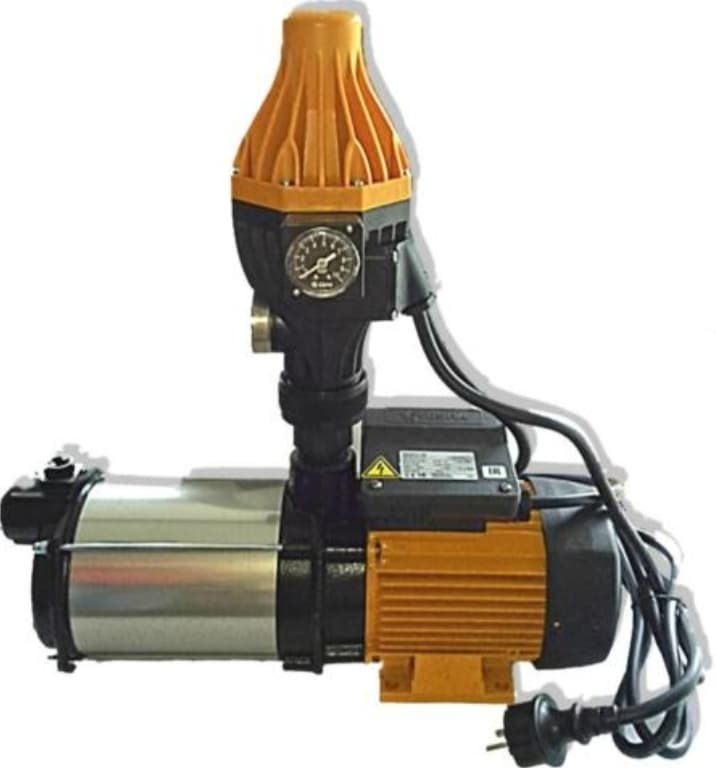
A float switch turns the motor off when the tank is full and back on when the level drops, so nobody has to watch it; see the float switch guide. Our PPR pipe and fittings guide explains the fittings, and the water pump guide covers the motor.
Cleaning the tank
Clean the tank at least once a year, and sooner if the water smells, looks cloudy or leaves grit in the bucket.
- Close the inlet and run the water out through the taps or the drain.
- Scrub the inside walls and floor with a soft brush. Avoid wire brushes, which scratch the plastic.
- Rinse and drain until the water runs clear.
- Refill, and check that the lid fits tightly so dust and birds stay out.
For how the tank fits into the rest of the house, see how a house water system works.