An overflowing roof tank and a motor someone forgot to switch off are two of the most common water problems in Pakistani homes. A float switch fixes both: it switches the motor on when the tank level drops and off when the tank is full, without anyone watching. These are our current prices for float switches and the pumps they control:
| Product | Price (PKR) |
|---|---|
| Float Switch | Rs.1,200Rs.1,300 |
| Automatic pressure Switch Controller ESPA | Rs.6,500 |
| Water Pump | Rs.18,000 |
| Water pump Espa | Rs.65,000 |
How a cable float switch works
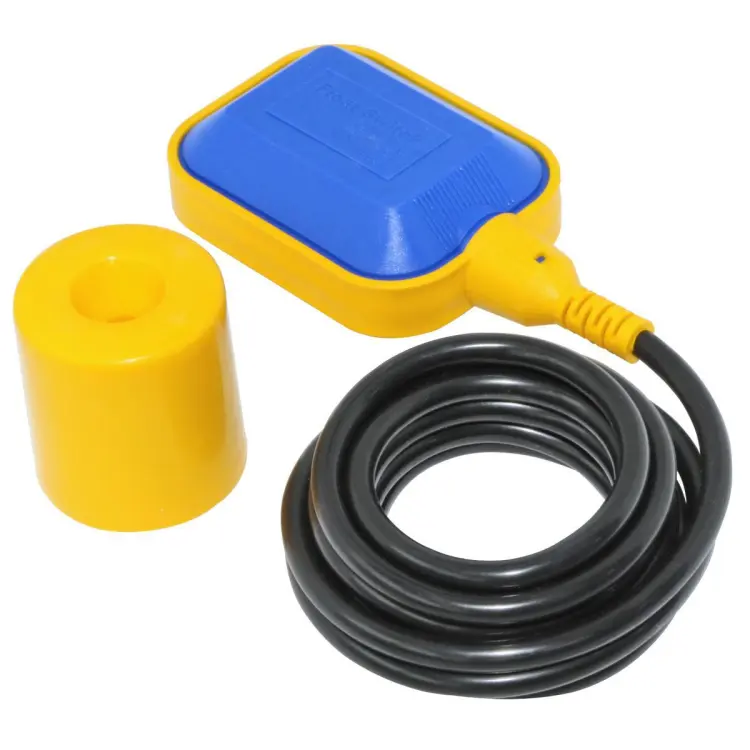
A cable float switch is a sealed plastic float on a length of cable, with a small weight clipped to the cable above it. Inside the float is a switch that changes over when the float tilts.
- When the water is low, the float hangs down and its switch is in one position.
- As the water rises, the float lifts and tilts upward around the weight, and the switch changes over.
- As the water falls again, the float drops back and the switch changes back.
The free length of cable between the weight and the float sets how far the water rises or falls between switching on and off. A longer free length gives a bigger gap, so the motor starts less often.
Shop · float switch
Float Switch
Where to fit it
In the roof tank (filling): the switch turns the motor on when the level drops and off when the tank is full. This stops overflow.
In the lower tank (dry-run protection): a second switch turns the motor off when the underground or ground tank runs low, so the pump never runs dry. Running dry can damage the pump's seal within minutes.
Many houses fit both, wired so the motor runs only when the roof tank needs water and the lower tank has water in it.
Fitting tips
- Hang the float away from the incoming water, so the splash doesn't tilt it early.
- Fix the cable firmly at the top of the tank, so the float can't slip lower over time.
- Keep the float clear of the tank wall, the pipes and the overflow, so it moves freely.
- In the roof tank, set the off level below the overflow outlet.
Wiring: leave it to an electrician
Many cable float switches can be wired for filling (roof tank) or emptying (lower tank), depending on which wires are used. The switch must also suit the motor: a small motor may be switched directly, while a bigger one is switched through a contactor. Have an electrician connect it, and ask us the switch's rating for your pump.
When the motor won't stop, or won't start
- The tank overflows: the float may be tangled, stuck against a pipe, or its cable has slipped lower. Check that it moves freely.
- The motor starts and stops quickly: the gap between on and off is too small. Lengthen the cable between the weight and the float.
- The motor never starts: check the lower tank's switch first (it may be correctly stopping a dry pump), then the wiring, then the pump.
The house water system guide shows where the float switch fits in the whole system, the water tank guide covers the tank, and the water pump guide covers choosing and protecting the motor.